Facility Assessments at the Ohio School for the Deaf and Ohio State School for the Blind
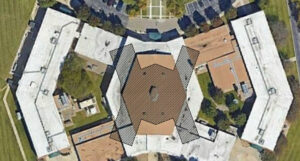
HDC is working with Metro CD Engineering to conduct facility assessments of totaling over 600,000 SF of space. The facilities date from the original 1953 construction and include newer facilities such as the dormitories and a new administration building. This is HDC’s first time working on the campus, which is across the street from us on Morse Road. President Charissa Durst also owns the 1875 Sharon Township Cherry Hill School building, which sits at the entry of the Ohio State School for the Blind on High Street. The goal of the assessments is to make recommendations for renovations and demolitions for immediate, short-term, and long-term planning. The result of the study will be used to determine the buildings that move forward with lighting upgrades for energy conservation.

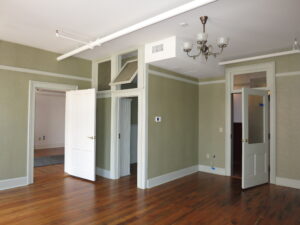
L: Entry lobby to the Old Administration Building at the Ohio School for the Deaf, which retains its original 1953 pendant light fixture. R: One of the new dormitories built in 2012.
Historic Building Elevator Modernizations
HDC was awarded a project to modernize five elevators in the City of Columbus Department of Public Health Building on Parsons Avenue. This building previously served as the Ohio State School for the Blind before they moved to their current campus with the Ohio School for the Deaf in 1953.

L: Front elevation of the Health Department. R: One of the elevator lobbies next to historic stone walls.
How did HDC end up getting this project? We previously worked on the team that prepared criteria documents to modernize nine elevators in the Ohio Statehouse and Senate Building with engineering firm Roger D. Fields & Associates and elevator consultant Lerch Bates’ Columbus office where a key component was modernizing the controls without impacting the design features from the 1990s rehabilitation.

L: Front elevation of the Ohio Senate Building. R: View of the top of one of the atrium elevators.
HDC subsequently supported the Bailey Edward design team, which included Lerch Bates’ Cincinnati office, to modernize nine elevators in the U.S. Federal Courthouse in Cincinnati for the GSA, where a key issue was preserving historic interior finishes and lobby finishes. Typically, elevators are modernized about every 30 years, when their components reach the end of their life cycle.

L: The first floor elevator lobby of the Peck U.S. Federal Courthouse features marble panels and green tile. R: The upper floor elevator lobbies feature a distinctive red floor tile.
Typically, the cab itself (a steel box), the hydraulic cylinder, and the shaft remain unchanged. Upgrades include new microprocessor-based controls (both inside the elevator and at every lobby level), new pump motors and valves, new closed-loop door operators, new lobby status panel at the security desk, new LED light fixtures, and new interior cab finishes.
Baker Brothers Wholesale Grocery Building is Listed in the National Register of Historic Places
HDC submitted the final version of the National Register of Historic Places nomination for the Baker Brothers Wholesale Grocery Building in December 2022 and the National Park Service officially listed it in June 2023! The nomination was highlighted in Ohio History Center’s Echoes Magazine September & October issue of Echoes Magazine.
To read the nomination, click here.
Northcoast Behavioral Health Project Starts Up Again
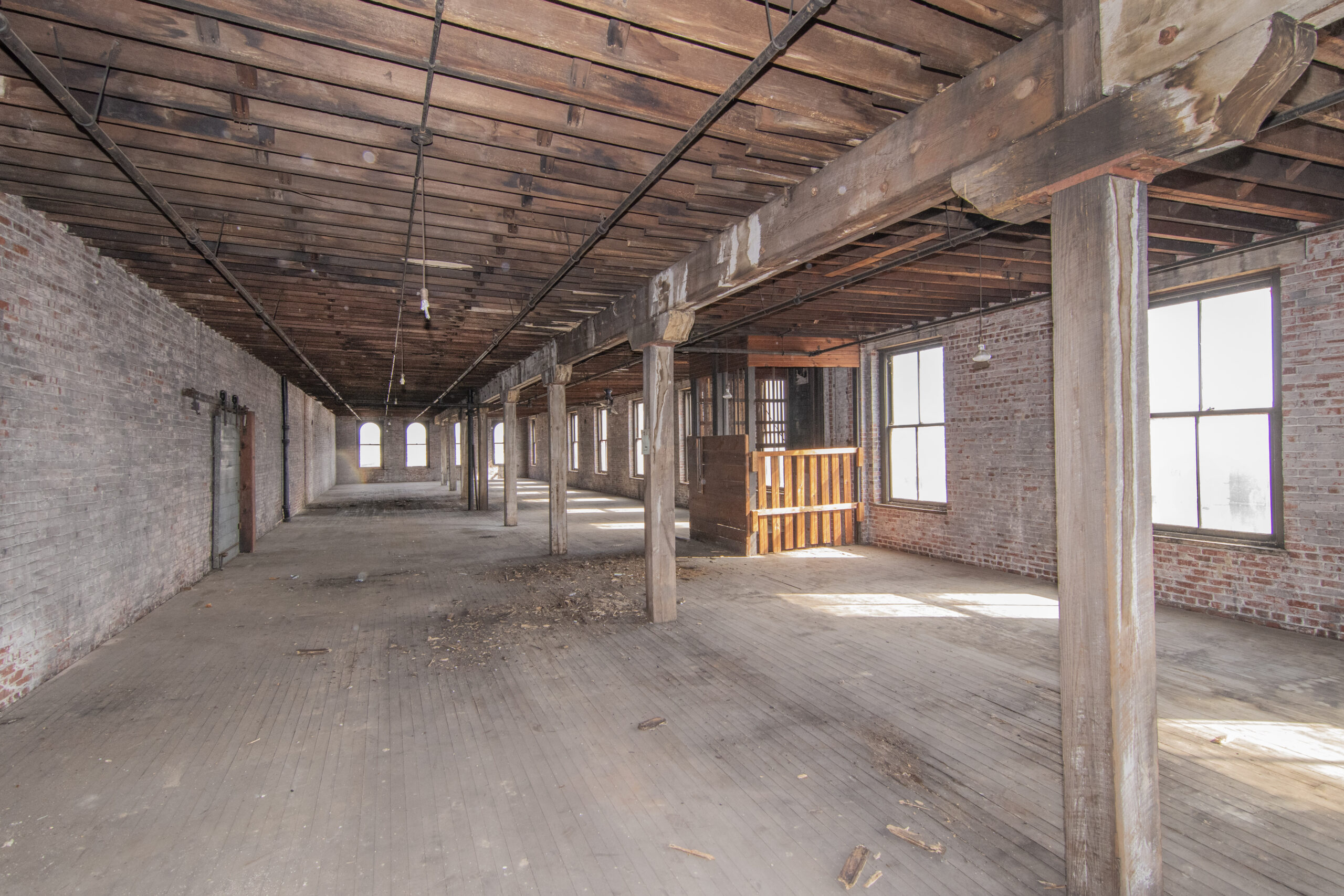
In April of 2022, HDC submitted a partial Schematic Design set with a menu of scope items, estimates, and work recommendations for the Northcoast Behavioral Health Center’s former Dietary Building for review by the Ohio Department of Development of Developmental Disabilities. The project was on hold but suddenly came back to life in March when a user group needed to move into the building. The Dietary Facility was built in 1993 and had not had any major updates in 30 years. It was designed as a kitchen to prepare meals for all the residents living in the complex. In 2015, the main hospital was renovated and expanded and by 2016, five buildings were demolished, including buildings built in the 1940s as part of the original Hawthornden State Hospital. The former Dietary Facility was then relegated to storage and overflow offices. HDC’s scope is to determine all work needed to convert the building into permanent office and storage use, and then provide a logical phasing schedule to accommodate a two-year funding cycle, with the first phase to be implemented this year.

View of the former dietary facility at Northcoast Behavioral Health.
Ziti the Noodle Dog is Now Competing at the Excellent Level in Agility!
As a puppy, Ziti was enrolled in agility classes as a way to dissipate her excess energy—she is the first and only HDC beagle to actually get the zoomies. She took to it immediately since it was not too different from jumping over rocks and walking fallen logs in her favorite metro parks. Ziti and Charissa started trialing in 2022 as Novice A (first timers for both handler and dog) and advanced through Open into Excellent for Standard agility, Jumpers with Weaves, and FAST. Ziti loves Jumpers with Weaves since she does not have to slow down or pause as required in Standard agility. FAST is her least favorite, since it now requires her to take obstacles on her own while Charissa is 15 feet away in the distance challenge. Our goal is to see if we can get Ziti into the Masters level and accumulate enough points to go to the Agility Invitational before Ziti gets too old/slow to compete in the FastCAT Invitational at the same time.

Left: Ziti takes a long jump obstacle at an AKC trial. Right: Ziti scrambles over the A-Frame with the judge watching. Photos by Mike at GameOnAgility.
HDC Celebrates over 25 years of Partnership with Kabil Associates
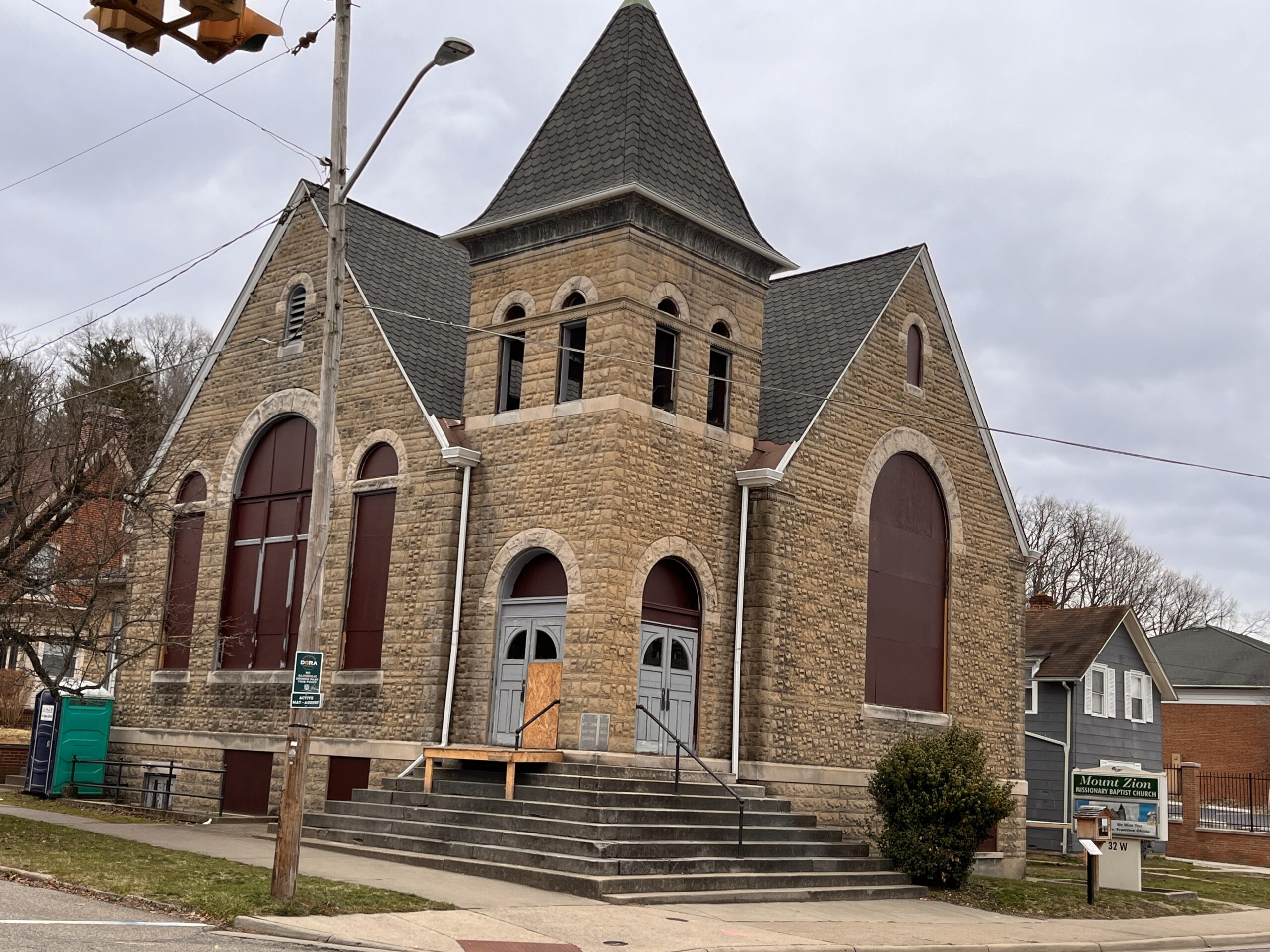
HDC was introduced to Kabil Associates while team members on Burgess & Niple’s Life Sciences Building project for The Ohio State University back in 1996. Almost 30 years later, Kabil Associates is still HDC’s go-to firm for structural engineering services, especially if it involves a historic building. Kabil Associates was established in 1980 by Shashi Savla, PE, who remains its President. Kabil Associates was the structural engineer on the Sojourner Center for Women and Children in Hamilton, Ohio, HDC’s first project with the State of Ohio. Other notable projects include the Lincoln Theatre, where Kabil had to infill portions of the basement as remnants of the 19th century building foundations were found to still be present and repair large holes in the steel structural members in the ballroom created by a prior renovation project. Kabil was also on the team for Stewart Elementary School, which required special handling of the 1870s rubble stone foundation after it was exposed to expand the lower level and to repair structural damage caused by a fire. Kabil has also supported many of our historic structure reports, including ones for the Mount Zion Baptist Church in Athens, the Macedonia Missionary Baptist Church in South Point, and the Hunter Robbins Museum in Granville.

Left: Sojourner Center entry with octagonal lobby tower whose structural members had to be sized to resist outward force. Right: Stewart Elementary School excavation exposed the stone foundation.

Left: The new Lincoln Theatre balcony required two new support columns at the center. Right: Floor beams at the Macedonia Missionary Baptist Church still has original hand hewn logs with tree bark.
HDC Starts Neighborhood Projects for City of Columbus
HDC was awarded two projects with the City of Columbus in 2023. The one that started first is the renovation of neighborhood facilities in two locations. The first is the All THAT Teen Center on East Livingston Avenue. The Teen Center is located in the former Shady Lane Presbyterian Church, which was built in 1959 and expanded in the mid-late 1960s. When the congregation left the building in 2019, it was acquired by the Teen Center, whose mission is to mentor teenaged youth in academic achievement, life skill development and career planning to succeed in school and beyond. Work at the Teen Center includes improving the parking lot and exterior lights, replacing the roof, updating the HVAC system to add air conditioning, replacing the exterior doors, adding an exterior monument sign, and repairing drains and piping to stop the water infiltration issues in the basement. The second location is Carol Stewart Village on West Broad Street, which is former 1980s era motel complex converted into a neighborhood for young adults who have aged out of the foster care system with on-site programs and services. Work at this location consists primarily of replacing deteriorated pavement and curbs, replacing the packaged heating and air conditioning wall units with more secure versions, and replacing the wooden doors and frames with more secure steel versions. The design for both locations had to fast tracked since the funding sources requires that construction be completed in 2023. Both projects are currently out to bid.

Left: Entry elevation of All THAT Teen Center. Right: One of the former motel wings at Carol Stewart Village.
HDC Welcomes Back Vivian Majtenyi!
The void left by the passing of Cathie Senter was thankfully filled by the return of Vivian Majtenyi in March. Vivian worked for HDC from 1999 (we were her first full-time architecture position) until 2013, when she left to take a break after working almost non-stop on our signature projects. During her 14 years at HDC, she traveled the country to complete facility assessments on Air Force Materiel Command installations and conduct research and documentation of historic buildings on navy bases. Vivian worked with Charissa Durst on the initial fieldwork at the Woodward Opera House through the rehabilitation of the second floor. She was also the project coordinator for both the addition to and renovation of the Lincoln Theatre and the addition and renovation of Stewart Elementary School. Vivian also obtained her architecture license in 2011. In the 10 years since she left HDC, her diverse work experience included the in-house design department of a construction firm, a large (over 650 employees) full-service A/E firm, and researching and writing historic architectural reports for cultural resources projects. Since HDC started new projects with the City of Columbus and State of Ohio this year, we are very happy to have Vivian back!

Left: Vivian leading a tour of the Lincoln Theatre. Right: Vivian’s celebratory cake upon passing the architecture license exam.
Office Dogs Supporting HDC Projects
HDC had previously posted a blog on the benefits of having a dog in the office, but what about bringing a dog onto the job site? It turns out that HDC’s office dogs have a long history of tagging along to job sites, especially those located in rural areas or near parks. Here’s a summary of the adventures of Bagle, Donut, and Ziti on job sites.
Bagle the Beagle
Bagle was with the office from 1992 to 2004. During the 1990s, HDC conducted numerous historic building inventories and evaluations for the Wayne National Forest in southern and southeastern Ohio. In one memorable trip she had to be carried over the metal pedestrian bridge over the creek because instead of a deck, it had rungs like a ladder. On the return trip, Bagle chose to cross the shallow waters. Bagle also got posed in front of numerous monuments in Washington D.C. as well as HDC’s first project with the State of Ohio and our first new construction project, the 7,000-square-foot outpatient center in Hamilton, Ohio.

At left, Bagle the Beagle referees a chess game in Washington, D.C. in 2000 and at right, in front of Sojourner Center in Hamilton, Ohio, in 2001.
Donut the Beagle
Donut’s tenure with HDC lasted from 2004 to 2018. During this time, HDC worked on many projects for ODOT and completed our first project with ODNR at the Day Lodge in John Bryan State Park. Donut came to many meetings in John Bryan State Park. If it was cool she stayed in the car. If it was warm she ended up under a big tree tethered to the picnic table. On warm days she could hear the meeting in progress through the open windows and barked loudly to express her displeasure at being left out. As a result, meetings finished quickly so that “poor Donut” could go for her walk in the park. Donut’s biggest contribution to the office was to bark while president Charissa Durst was on the phone with an ODOT auditor, who was demanding more paperwork to support a change order. Once the auditor was told the “noise” was the office beagle, he calmed down and mentioned he had a beagle growing up and assured us he would take care of the change order. Our payment arrived within a week!
At left, Donut poses next to a statue of Fala at the Franklin Roosevelt Memorial in Washington, D.C. in 2010, and at right, by the Day Lodge porch in John Bryan State Park in 2017.
Ziti the Noodle Dog
Since Ziti grew up with her littermates for 9.5 weeks, she is used to being surrounded by others. We used to joke that Donut had FOMO (fear of missing out), but Ziti definitely has a fear of being left out! As a result, she accompanies Charissa Durst everywhere she goes, even if Ziti just ends up waiting in the car in a parking garage. Fieldwork trips where Ziti was a big hit with clients she met on site at the Macedonia Missionary Baptist Church in South Point, Mount Zion Baptist Church in Athens, and the Lathrop House in Sylvania. Ziti loves when our projects are located in parks!
At left is Ziti at the Lathrop House in 2020, which is in Harroun Park in Sylvania and at right she is in front of the Meade House in 2021, which is in the Meade Historic Preserve in Symmes Township.
HDC Documents Another Building at Taylor Farm Park
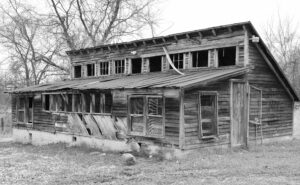
HDC is working with the City of New Albany to document the Chicken House at Taylor Farm since the building sits in the flood plain and may have to be moved or reconstructed at another location. The design for this half-monitor chicken house was invented by the University of Illinois Extension and became quite popular on rural properties in the Midwest throughout the 1920s. Since these buildings typically did not have electricity, the south-facing windows let in plenty of light to warm the nesting boxes used by the hens along the north wall in the winter. The high windows in the monitor draws hot air up and out for ventilating to keep the hens cool during the summer. The steep north roof causes cold north winds to blow over the building and there are no windows on the north wall. This building sits on a concrete foundation that features three square openings under the south-facing windows that allowed the chickens free access into the yard. The interior would have been divided into three individual rooms with removable walls for easy cleaning.
At left is an archival photograph of the southeast corner by Jeff Bates and at right is a cast iron corner brace at the screen door.
HDC Continues Successful 10-year Relationship with Kramer Engineers
HDC first worked with Kramer Engineers at Hocking College in 2013 on a feasibility study to renovate a former bookstore building for the School of Music. The team is currently working on a new storage building for the Ohio Department of Natural Resources in Fernwood State Forest. In the intervening years, major projects together include the Scioto Southland Recreation Center, Devon Pool Bath House and Mechanical Building, administration buildings in Clark County, and the John Bryan State Park Day Lodge. The relationship has also worked in both directions with HDC working as Kramer’s consultant on their projects for the Department of Rehabilitation and Correction and Department of Developmental Disabilities.

At left, the Hocking College Bookstore, which the team concluded was originally a modular building, and therefore not acoustically suited for a music school and at right, the interior of the John Bryan State Park day lodge, with built-in devices in the ceiling to lift the one-piece solid wood table.
At left, the new Devon Pool Mechanical Building designed to match the Bath House and at right, the Scioto Southland Recreation Center with the renovated gymnasium left of the new entry and addition.
HDC Wins Diversity in Business Award